Home / Continuity & Story Logic
Film Editing: A Complete Beginner’s Guide to How Editors Shape Story, Time, and Emotion
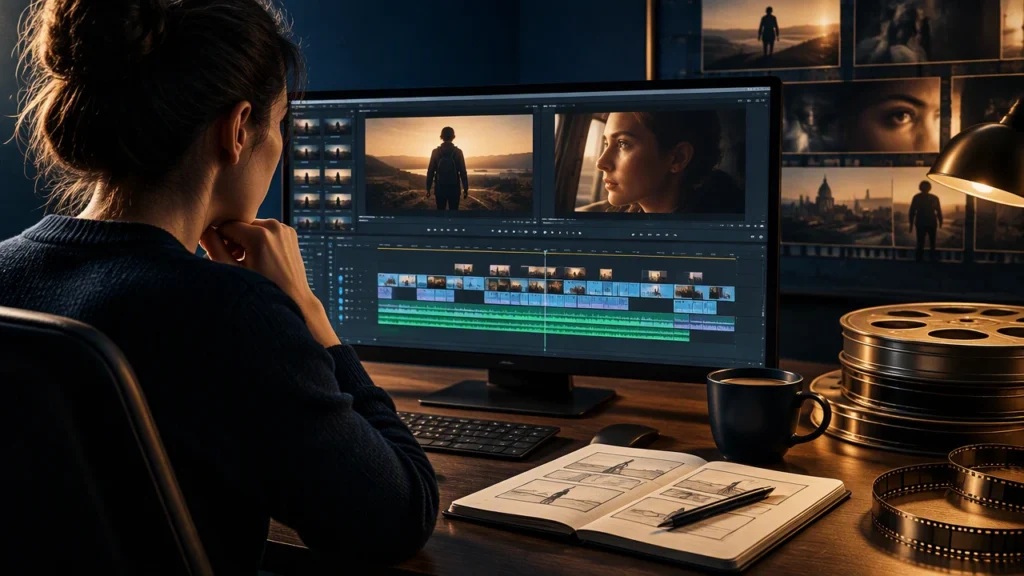
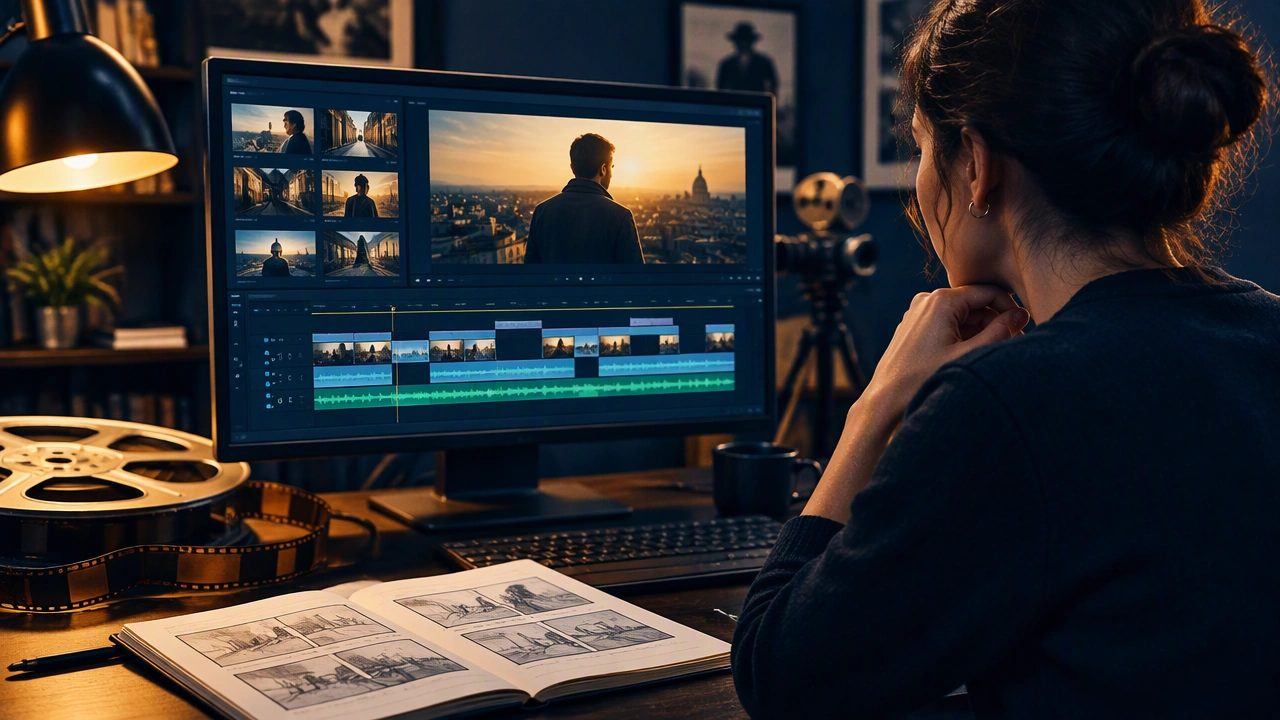
Film editing is where a movie truly finds its story. While the script provides the blueprint and the shoot captures the raw material, it is in the editing room that time is compressed, performances are shaped, and emotion is given rhythm. For beginners, understanding film editing how stories are cut together demystifies why some films feel seamless and gripping while others feel confusing or flat. This guide breaks down the core ideas, techniques, and decisions that editors use every day.
What Does a Film Editor Actually Do?
An editor is a storyteller who works with footage after filming. Their job goes far beyond simply trimming mistakes or joining shots in order. Editors select the best takes, decide what the audience should see and when, control pacing, and build meaning through juxtaposition. A slight change in timing — holding a reaction shot for an extra half second or cutting away a moment too early — can completely alter how a scene feels. In essence, editors manage attention, clarity, and feeling, guiding the viewer through the story without drawing attention to the cuts themselves.
The Core Principles: How the Cut Shapes Meaning
Every cut is a decision about story, time, and emotion. Understanding these three dimensions helps beginners see editing as a creative language rather than a technical chore.
1. Story and Structure
Editors shape story by choosing what to show, what to omit, and in what order. They might rearrange scenes, remove exposition that slows momentum, or intercut two storylines to create tension. This is often called construction — building a clear cause-and-effect chain so the audience always knows where they are and why it matters. A well-edited story feels inevitable, even if much material was left on the cutting room floor.
2. Time
Film time is not real time. Editors compress hours into seconds with ellipses, expand a fleeting moment with slow motion or overlapping cuts, and create parallel action by cross-cutting between locations. The classic example is a journey: instead of showing an entire drive, an editor might use three shots — a car pulling away, a highway sign, and the car arriving — and the audience instantly understands that time has passed. Controlling time keeps the narrative efficient and engaging.
3. Emotion and Rhythm
Rhythm is the heartbeat of a scene. Quick cuts can create energy, anxiety, or excitement, while longer takes allow tension or intimacy to build. Editors listen to the natural rhythm of performance, dialogue, and music, cutting on movement or breath to make transitions feel organic. Emotion often lives in the pause before a character speaks or the decision to stay on a listener instead of the speaker. These subtle timing choices shape how deeply the audience feels a moment.
Essential Cutting Techniques Every Beginner Should Know
While every film develops its own style, most editing relies on a handful of foundational techniques:
- The Standard Cut: The most common transition, joining two shots directly. When done well, it is invisible and keeps the story flowing.
- J and L Cuts: Audio from the next scene begins before the picture changes (J-cut), or audio from the previous scene lingers after the picture has cut (L-cut). This creates smooth, overlapping sound that feels natural, like real conversation.
- Cutting on Action: Cutting in the middle of a movement — a door opening, a head turning — hides the cut within motion and maintains momentum.
- Cross-Cutting: Alternating between two or more scenes happening simultaneously to build suspense or show connection, often used in chase or phone-call sequences.
- Montage: A series of short shots that compress time, convey information, or express an idea, such as a character training, traveling, or falling in love.
- Match Cut and Jump Cut: A match cut links two shots with similar composition or action for visual poetry, while a jump cut intentionally breaks continuity for disorientation or stylistic effect.
Continuity Cutting: The Invisible Art
Continuity cutting aims to make the edit disappear so the viewer stays absorbed in the story. It relies on a few invisible rules developed over a century of filmmaking. The 180-degree rule keeps camera angles on one side of an imaginary line between characters, preserving spatial orientation. Eyeline match ensures that when a character looks off-screen, the next shot shows what they see from a logical angle. Shot-reverse-shot structures dialogue so that each speaker appears to face the other. When these patterns are consistent, the audience can follow complex scenes without conscious effort. Good continuity editing is not about being rigid — it is about being clear enough that you can break the rules intentionally when the story calls for it.
How Editors Build Emotion Beyond Continuity
Once clarity is established, editors can shape emotion more deliberately. They control pacing by varying shot length, use close-ups to intensify intimacy, and hold on reactions to let feelings resonate. Sound and music are powerful partners: a cut timed to a musical beat feels satisfying, while a cut that deliberately lands off-beat can feel jarring. Editors also work with performance, often blending the best moments from several takes to create a single, authentic-feeling delivery. Perhaps most importantly, they know when not to cut — allowing a silence or a lingering look to speak louder than any dialogue.
A Simple Workflow: From Raw Footage to Final Cut
Professional editing follows a structured process that beginners can adapt at any scale:
- Logging and Assembly: Review all footage, select the best takes, and build a rough assembly in script order to see the shape of the story.
- Rough Cut: Focus on story and structure. Trim scenes for clarity, experiment with order, and establish the overall pacing without worrying about perfection.
- Fine Cut: Refine timing, performance, and rhythm. Adjust each cut by frames, tighten dialogue overlaps, and ensure continuity flows naturally.
- Picture Lock and Polish: Once the story is locked, add sound design, music, color correction, and titles. At this stage, changes to timing become costly, so emotional and narrative decisions should already be solid.
Common Beginner Mistakes to Avoid
- Cutting too frequently: Constant quick cuts can exhaust the viewer and dilute impact. Let important moments breathe.
- Ignoring audio: Hard, abrupt sound cuts are more distracting than picture cuts. Use J and L cuts and room tone to smooth transitions.
- Overusing effects: Flashy transitions and filters rarely serve the story. A simple cut is almost always more powerful.
- Losing spatial orientation: Crossing the 180-degree line without motivation can confuse the audience about who is where.
- Editing without purpose: Every cut should answer the question, why now? If a cut does not clarify story, time, or emotion, reconsider it.
How to Start Watching Like an Editor
The best way to learn editing is to watch films actively. Choose a scene you love and rewatch it with the sound off, counting how long each shot lasts and noticing where cuts occur. Then watch again with sound, listening for how dialogue and music motivate the cuts. Ask yourself: What does each cut reveal or conceal? How does the rhythm change between calm and tense moments? Over time, you will start to feel the invisible craft that makes film editing how stories are cut together such a powerful and essential art — not just assembling footage, but shaping how we experience time, character, and feeling itself.