Home / Continuity & Story Logic
Cross cutting parallel editing for suspense: how intercutting simultaneous actions builds tension on screen
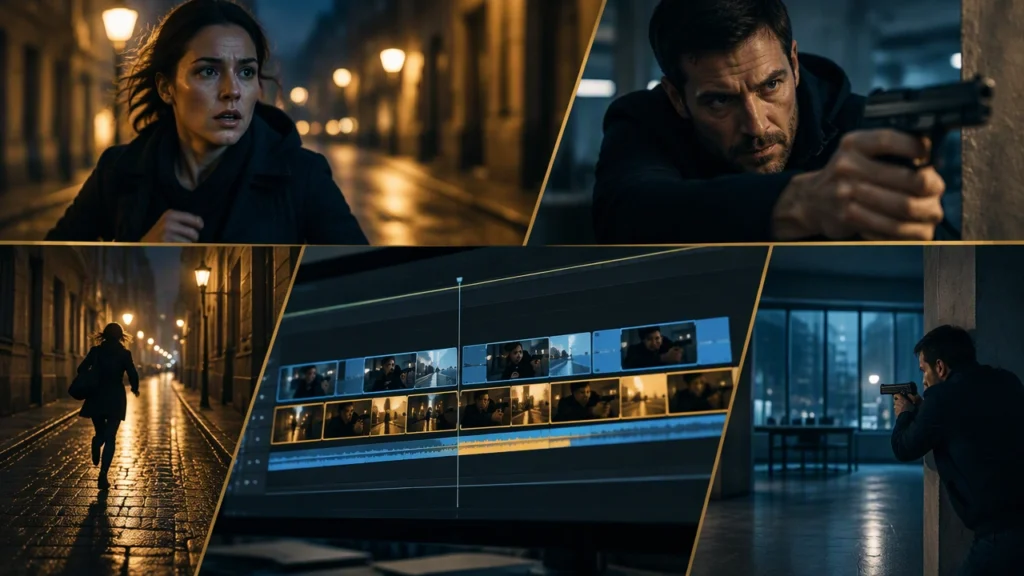
In film editing, suspense rarely comes from what happens next. It comes from how the audience is allowed to know, and when. Cross cutting parallel editing for suspense is the practice of intercutting simultaneous actions so that each scene feeds the other, compressing time, guiding attention, and turning ordinary moments into pressure cookers.
Unlike rapid cutting within a single scene, parallel editing juxtaposes separate spaces and points of view. The editor builds a rhythm that tells the viewer these events matter together, then stretches or tightens that rhythm until the audience feels the outcome closing in.
Why parallel editing creates tension
Parallel editing builds suspense through a few core mechanics that work together.
- Split attention: The audience must track two or more threads at once, which creates cognitive load and anticipation.
- Information control: Showing different amounts of knowledge in each thread lets the editor hide, reveal, or delay key facts.
- Temporal pressure: Intercutting implies shared time, so each cut can suggest a deadline approaching.
- Emotional contrast: Pairing calm with danger, or hope with threat, amplifies both.
When these elements align, every cut becomes a small promise: the story is moving toward a collision, and the audience wants to see where it lands.
Building blocks editors use
Establishing the simultaneity
Before tension can escalate, the viewer must believe the events are happening at the same time. Editors often use a clear anchor, such as a shared sound cue, a clock, a recurring motif, or a visual match that links the spaces. A simple establishing pattern can be enough: show the destination, show the starting point, then begin intercutting with consistent screen direction or color cues so the audience can hold both threads in mind.
Setting the baseline rhythm
Early in a sequence, give each thread enough breathing room. Longer shots let the audience settle into the geography and the stakes. If the cuts start too fast, the viewer may lose the sense that these events are simultaneous and meaningful rather than merely chaotic.
Controlling point of view
Decide what each thread knows. A character may see a threat the audience has already spotted. Another character may be unaware of a ticking clock that the audience understands from the other thread. This mismatch of knowledge is where suspense lives. The editor can tilt the balance by spending more time in the uninformed perspective or by cutting to the threat at precise moments.
Modulating pace
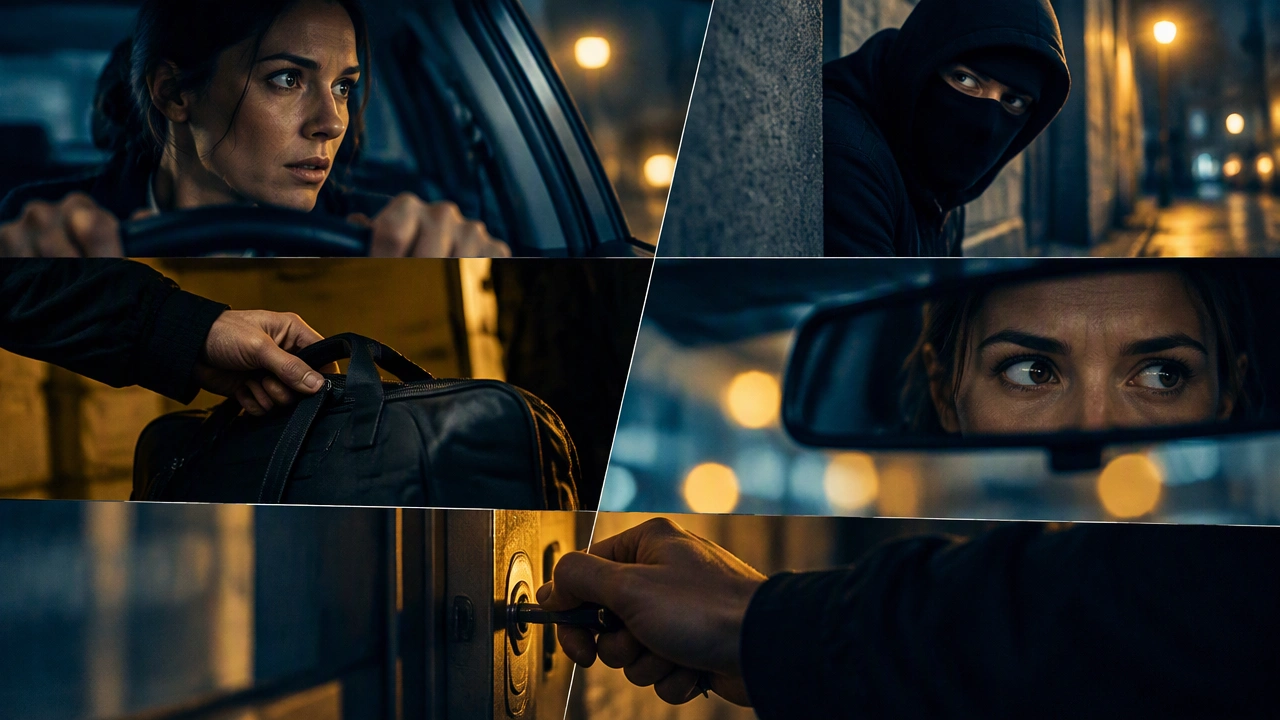
As pressure builds, shorten the shots and increase the frequency of intercuts. Alternate between close-ups that register emotion and wider shots that remind the viewer of space and obstacles. Use insert shots, such as a hand reaching for a lock or a timer inching forward, to mark progress without dialogue.
Strategic withholding
Sometimes the most powerful choice is to stay with the thread that has less information. The audience will project danger onto the unseen thread. When the cut finally arrives, the release can be either relief or shock, both of which feel earned because the editor held back at the right moment.
A practical scene blueprint
Imagine a rescuer racing to a building while a trapped character hides inside. Here is a simple editorial arc that uses parallel editing to build suspense.
- Setup: Show the trapped character’s location and the threat nearby. Then show the rescuer starting the journey. Use longer takes to ground geography.
- Intercut pattern: Alternate threads in a consistent rhythm. Let the rescuer face an obstacle, then cut back to the threat moving closer.
- Escalation: Shorten the shots. Add close-ups of hands, keys, breath. Introduce a repeated motif, such as a floorboard creak, that appears in both threads.
- Delay: Keep the cut with the rescuer just outside the door while the threat closes in off screen. Trust the audience to feel the time.
- Convergence: Bring the threads into the same space. Let the final intercuts become nearly simultaneous, then resolve with one decisive action.
This structure works because it gives the viewer a map, then tightens the map until the only exit is the climax.
Common pitfalls and how to avoid them
Unclear geography
If the audience cannot place the characters, the tension collapses. Use establishing shots, consistent screen direction, and distinct visual signatures for each thread, such as lighting temperature or color accents.
Overcutting too early
Fast intercutting before the stakes are clear produces noise, not suspense. Start with a stable rhythm and accelerate only after the audience understands what is at risk.
False equivalences
Not every thread deserves equal time. Allocate screen time based on dramatic weight. If one thread carries more uncertainty, let it lead the rhythm and use the other as punctuation.
Overexplaining with dialogue
Parallel editing is a visual language. Where possible, let actions, sounds, and images carry the information. A ticking sound or a repeated gesture can be clearer and tenser than a line of exposition.
Sound as the hidden spine
Sound often holds parallel threads together. Editors and sound designers use motifs that travel across cuts, such as a siren that starts in one thread and bleeds into the next, or a steady heartbeat that underscores both spaces. Crossfades, hard cuts, and sudden silence become timing tools. Silence before a key cut can be more powerful than a crescendo, because it focuses attention and makes the next image land harder.
Emotional design, not just mechanics
Cross cutting works best when it is tied to character feeling, not only plot logistics. Ask what the audience should feel in each intercut: curiosity, dread, hope, irony. Then choose shots and durations that serve that feeling. A lingering look can slow time. A flash of a threat can accelerate it. The editor’s job is to align rhythm with emotion so the structure feels inevitable rather than mechanical.
When to break the pattern
Once the pattern is established, a single deviation can be the climax. Stay with one thread longer than expected. Cut to black. Drop sound. Or merge the threads into a single continuous shot as they converge. The break signals that the rules have changed and the outcome is arriving.
Cross cutting parallel editing for suspense is ultimately about guiding attention under pressure. By intercutting simultaneous actions, controlling information, and shaping rhythm, editors turn time itself into a storytelling device, letting the audience feel every second count.