

Visual Transitions: When Fades, Wipes, and Dissolves Serve the Story
Fades, wipes, and dissolves can guide time, mood, and attention—or interrupt a scene. Learn how to choose transitions that serve the story.
Fades, wipes, and dissolves can guide time, mood, and attention—or interrupt a scene. Learn how to choose transitions that serve the story.

Learn color correction basics for video editors to fix continuity, shape mood, and prepare a clean timeline for final grading.

Continuity editing keeps geography clear. This guide explains the 180-degree rule, eyeline match, and screen direction with film examples.
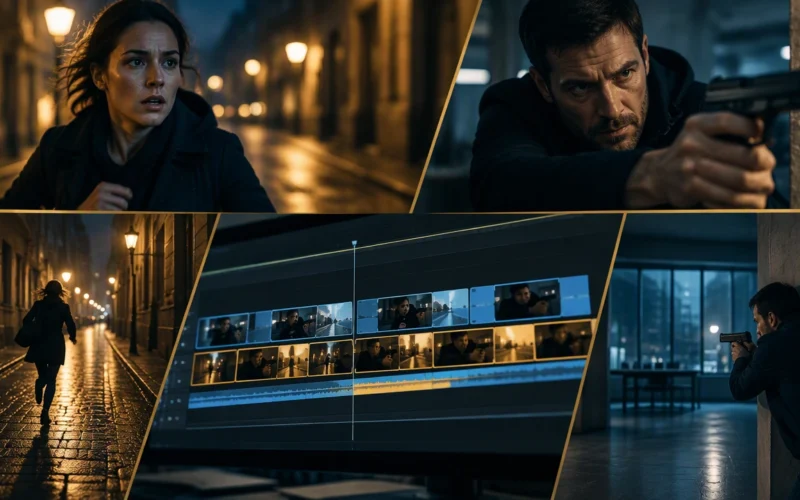
Cross cutting parallel editing for suspense intercuts simultaneous actions to tighten pacing, control information, and raise stakes without extra dialogue.

A practical dialogue editing workflow for clean conversation: clean, smooth, and balance speech so every line stays clear.

Learn how editors shape story, time and emotion through the cut — a calm, beginner-friendly guide to the art and craft of film editing.

Learn how a J cut L cut dialogue editing technique keeps conversations flowing naturally, guides attention, and hides the edit.

Match cut examples action and graphic cuts link shots through movement and shape, turning transitions into storytelling that guides the eye and clarifies meaning.

Explore Kuleshov effect montage theory examples and see how Eisenstein's juxtaposition turns separate shots into emotion, rhythm, and meaning.

Build a clear system for bins, labels, proxies, and timelines so you find shots faster and protect every edit from mistakes.