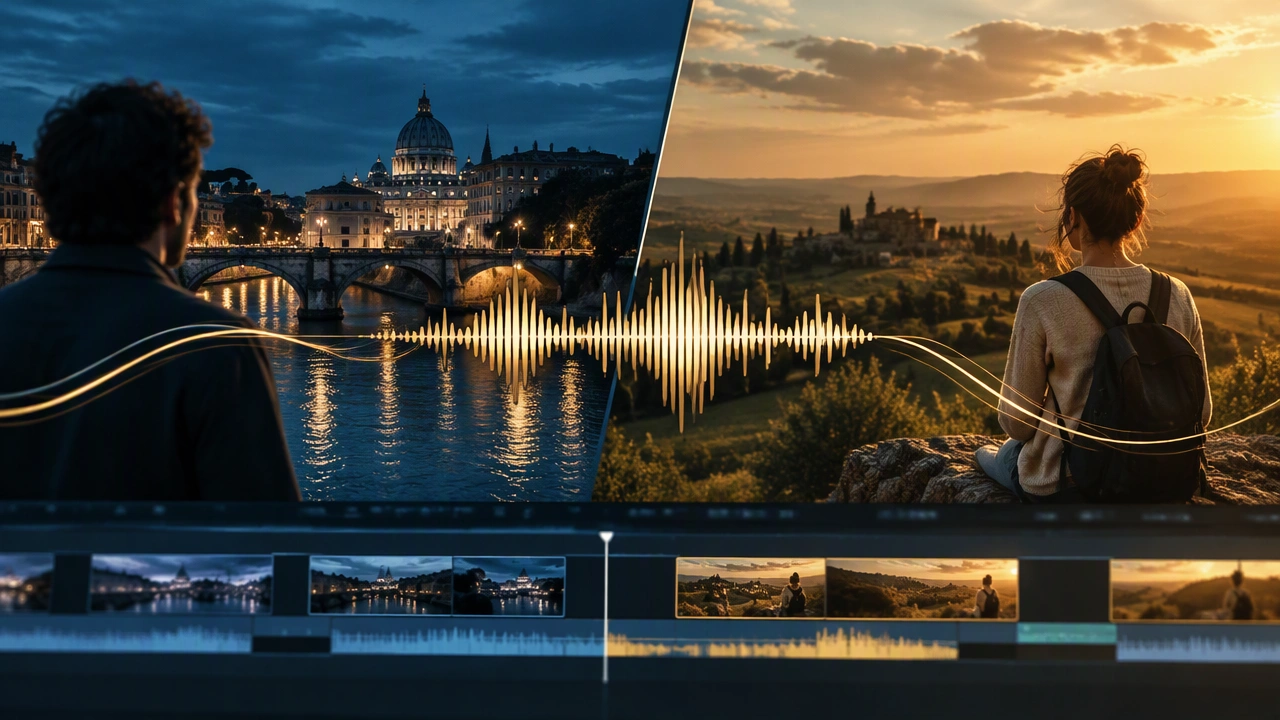
A sound bridge is one of the most elegant tools in an editor’s arsenal. It connects two scenes by allowing the audio from the incoming scene to begin before the visual cut, or letting the audio from the outgoing scene linger after the picture has changed. This technique smooths transitions that would otherwise feel jarring and creates a sense of continuity across time and space. Think of a character finishing a sentence in a kitchen while the visual has already shifted to the office where the next conversation begins. The audience follows the emotional thread without noticing the jump. Sound bridges also work in reverse for dramatic effect, where the audio arrives before the image, building anticipation. Editors use ambient tones, music swells, or a single line of dialogue to carry the viewer across the cut. Mastering sound bridges means understanding that the ear often leads the eye, and a well-placed audio cue can make an impossible transition feel completely natural.