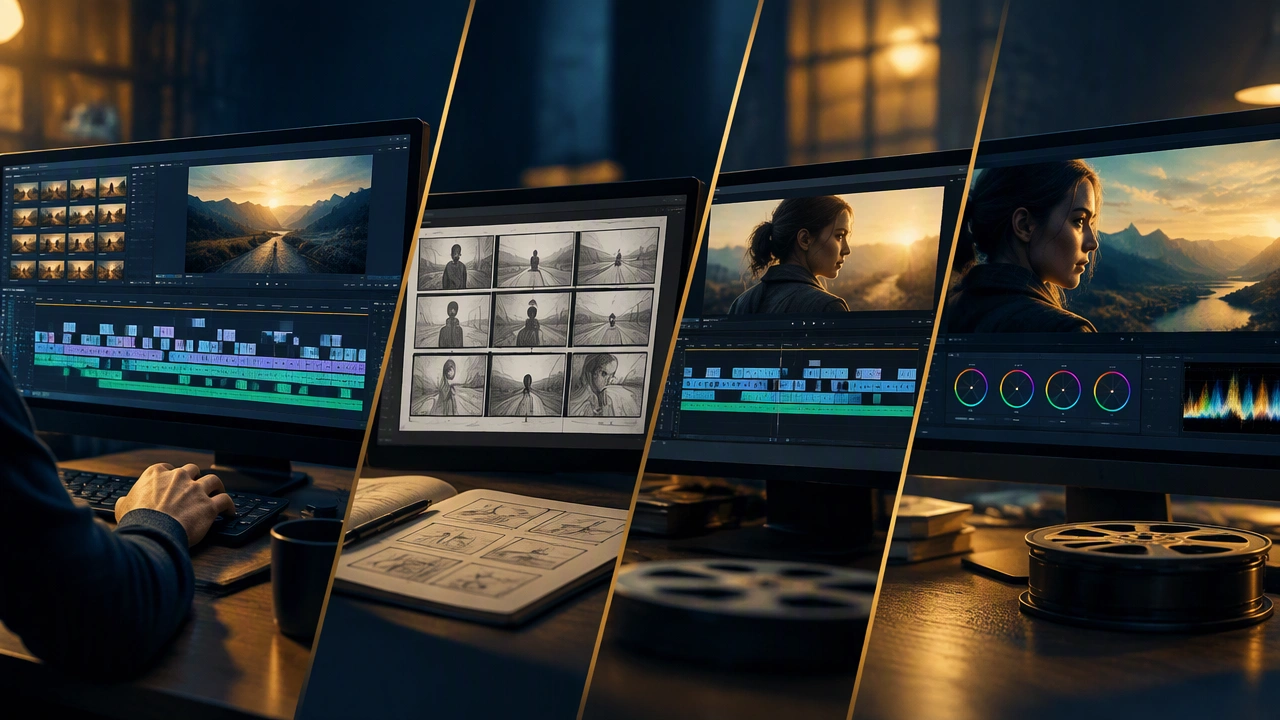
From Assembly to Final Cut: How Story Structure Changes at Every Editing Stage
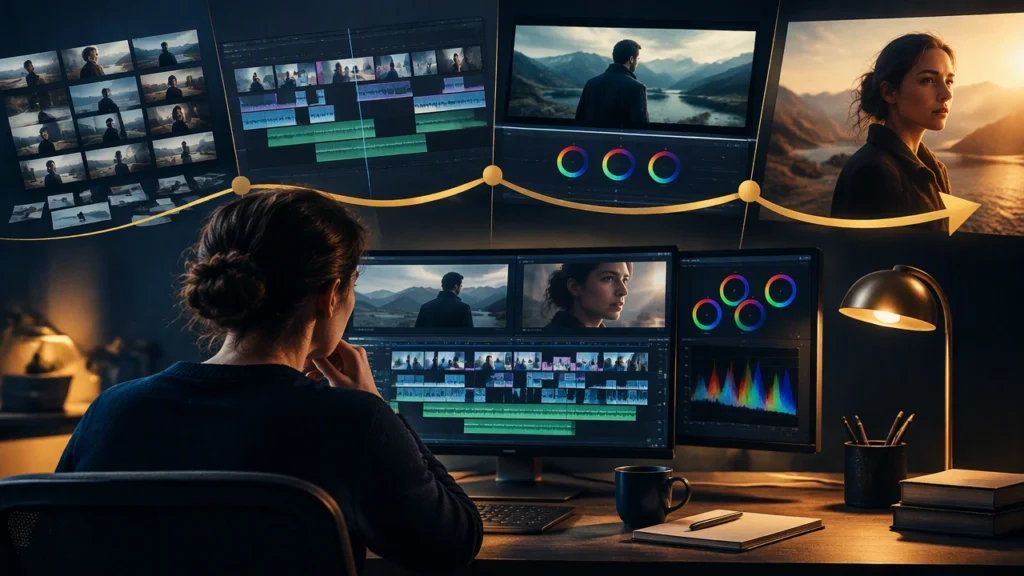
Film editing is where a story stops being a list of scenes and starts becoming an experience. The editor begins with hours of footage, competing intentions, and scenes that may work individually but not yet in sequence. Through a series of deliberate passes, the cut discovers what the story is really about.
The rough cut to final cut editing process steps are not simply technical milestones. Each stage changes the editor’s questions, the amount of freedom in the material, and the way rhythm, causality, and character intention are understood. Moving from assembly to rough cut to final cut gives the film its structure one decision at a time.
Assembly: Seeing the Material Without Judging It
The assembly is the first full version of the film in timeline form. Editors place scenes in a plausible order, include most available coverage, and avoid aggressive trimming. Its purpose is not beauty or pace. The assembly exists so the creative team can see the whole shape of the story for the first time.
At this stage, scenes often run long, transitions feel heavy, and subplots appear more prominent than they will in the finished film. That is useful. An editor can only evaluate what has been made visible. The assembly exposes missing scenes, repeated explanations, unclear chronology, and moments that were intended to be important but do not register on screen.
What the assembly reveals
- Story logic: Do events follow one another with clear cause and effect?
- Character intention: Can the audience tell what each main character wants in each sequence?
- Material gaps: Does a key turn, reaction, or transition need footage that has not yet been assembled?
- Structural weight: Which scenes dominate the running time without earning that space?
The assembly is also where expectations meet evidence. A scene that sounded essential in the script may become redundant once performance, context, and neighboring scenes are visible. Conversely, a small reaction shot may carry more emotional force than the dialogue around it. The editor records these discoveries without yet making permanent decisions.
Rough Cut: Finding the Story Inside the Assembly
The rough cut is the first stage that begins to behave like a film rather than a catalog of scenes. The editor removes obvious excess, tightens entrances and exits, reorders sequences when needed, and starts testing different emotional pathways through the material. The story becomes shorter, clearer, and more selective.
This is where structure becomes an active tool. A scene may move earlier to establish motivation before an action sequence. A line of dialogue may shift from the beginning of a conversation to its end so it lands as a consequence. Reactions may be separated from the events that caused them, allowing the audience to feel an impact before fully understanding it.
How the story evolves during the rough cut
- Causality sharpens: Scenes connect through decisions and consequences rather than simple chronology.
- Point of view narrows: The film decides whose experience guides the audience through each sequence.
- Themes become visible: Repeated images, phrases, and behaviors begin to form patterns.
- Rhythm emerges: Long scenes, quick exchanges, and pauses start creating a recognizable pulse.
Rough cutting is often iterative. Editors may build alternate versions of the same sequence to compare them. One version can prioritize suspense by withholding information; another can prioritize empathy by showing a character’s reaction earlier. These trials are not signs of indecision. They are a way to discover which structure produces the intended audience response.
Fine Cut: Refining Meaning and Momentum
Once the large structural questions are reasonably stable, the fine cut concentrates on precision. Scenes are trimmed frame by frame, performances are balanced, and transitions are adjusted so the audience moves through the story without noticing the mechanics. The film begins to feel continuous even when it contains many cuts.
Editors examine where attention should rest. A look may need two extra frames to register. A pause may need to shorten so the next line arrives with pressure rather than delay. Background action may be checked to ensure it supports the scene instead of competing with it. These choices shape comprehension as much as emotion.
Continuity and clarity before polish
Before sound, color, and visual effects are finished, the picture edit must still communicate cleanly. Placeholders may stand in for unfinished effects, but their timing and scale should approximate the final work. Dialogue edits should preserve natural speech while removing accidental overlaps or technical distractions. The goal is a cut that can be judged as a complete dramatic argument, not merely a collection of good moments.
Picture Lock: Committing to Structure
Picture lock marks the point at which the sequence and duration of the picture are considered final. It is a major threshold because sound designers, composers, colorists, and visual effects teams need a stable foundation. After lock, changing the structure becomes costly and disruptive, so unresolved story problems should be addressed before this commitment.
A locked picture does not mean every frame is sacred. It means the creative team agrees that the story now works in its chosen order and length. The remaining work will support that structure rather than reinvent it.
Final Cut: Harmonizing Picture, Sound, and Finish
The final cut is the completed picture after sound design, music, color, effects, and detailed finishing have been integrated. Even at this stage, small picture adjustments may occur when a sound cue reveals a timing issue or when a visual effect changes the weight of a shot. The editor protects the structure while allowing other departments to deepen it.
Sound can alter perceived pace. A low ambient tone can make a pause feel tense; a sharp effect can make a cut arrive sooner than the picture alone suggests. Music can connect separate shots into a single emotional movement. Color can guide the eye toward a detail that changes how a scene is understood. The final cut emerges when these layers agree.
The Editing Stages as a Story Strategy
The progression from assembly to rough cut to final cut is a movement from possibility to commitment. The assembly asks what the film could be. The rough cut tests what the story needs. The fine cut refines how the audience experiences it. Picture lock confirms the structure, and the final cut integrates every element into one coherent whole.
Good editing does not merely shorten footage. It establishes priority. Each pass decides what deserves attention, what can be inferred, and what should remain unseen. By treating the rough cut to final cut editing process steps as distinct forms of thinking, editors turn raw material into a story with purpose, pressure, and rhythm.